Hypochlorous Acid Spray for Skin: Benefits, Uses, Side Effects & Dermatologist Advice (2026 Guide)
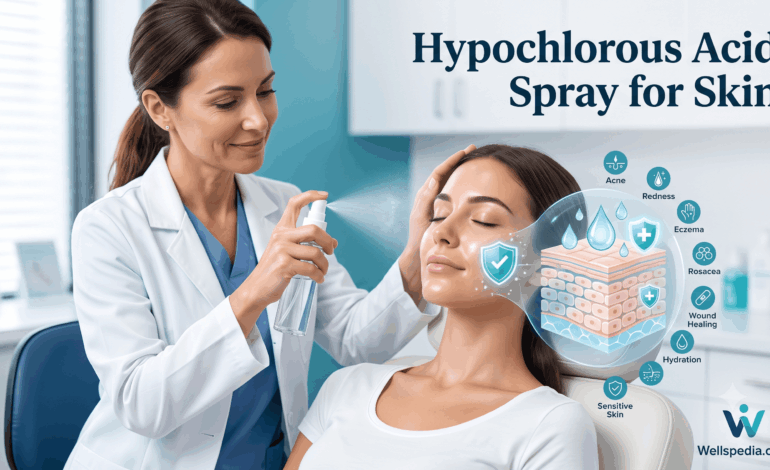
Skin care trends come and go, but a few ingredients earn the trust of dermatologists because of their science-backed benefits. One such ingredient is hypochlorous acid (HOCl). Once used mainly in hospitals and wound care, hypochlorous acid spray has become a popular skincare product for people with acne, eczema, rosacea, and sensitive skin.
Unlike harsh disinfectants, properly formulated hypochlorous acid sprays are designed to support the skin’s natural defense system while being gentle enough for daily use.
In this Wellspedia guide, you’ll learn what hypochlorous acid spray is, how it works, its benefits, possible side effects, and how dermatologists recommend using it.
What Is Hypochlorous Acid?
Hypochlorous acid (HOCl) is a naturally occurring molecule produced by your white blood cells. It plays an important role in the immune system by helping the body fight harmful bacteria, viruses, and other microorganisms.
Scientists discovered that purified hypochlorous acid could also be safely used on the skin to cleanse wounds, reduce harmful bacteria, and calm inflammation.
Unlike household bleach, skincare-grade hypochlorous acid contains very low concentrations specifically formulated for safe topical use.
How Does Hypochlorous Acid Spray Work?
Hypochlorous acid works in several ways:
-
Reduces harmful bacteria on the skin
-
Supports the skin’s natural healing process
-
Helps decrease redness and inflammation
-
Maintains a healthy skin microbiome
-
Cleanses the skin without disrupting its protective barrier
Because it is gentle, many dermatologists recommend it for people with sensitive or reactive skin.
Benefits of Hypochlorous Acid Spray for Skin
1. Helps Reduce Acne-Causing Bacteria
Hypochlorous acid may reduce bacteria associated with acne while calming inflamed pimples. It can be a useful addition to an acne routine, especially for people who cannot tolerate stronger products.
2. Supports Wound Healing
Medical-grade hypochlorous acid has long been used in hospitals for wound care because it helps keep wounds clean while supporting healing.
Minor cuts, scrapes, and post-procedure skin may benefit when used according to healthcare advice.
3. Calms Redness and Irritation
People with sensitive skin often experience redness after cleansing or exposure to environmental triggers.
Hypochlorous acid can help soothe irritated skin without causing excessive dryness.
4. May Benefit Eczema-Prone Skin
Although it is not a cure for eczema, hypochlorous acid may help reduce bacterial buildup that can worsen eczema flare-ups.
Many dermatologists recommend combining it with fragrance-free moisturizers.
5. Helps Manage Rosacea
Rosacea-prone skin is easily irritated.
Hypochlorous acid spray may reduce inflammation while being gentle enough for everyday use.
6. Refreshes Skin After Exercise
Sweat can mix with oil and bacteria, increasing the chance of breakouts.
A quick spray after workouts may help refresh the skin until proper cleansing is possible.
7. Safe for Sensitive Skin
Unlike alcohol-based facial sprays, hypochlorous acid generally does not sting or excessively dry the skin when used as directed.
Common Uses
Dermatologists may recommend hypochlorous acid sprays for:
-
Acne-prone skin
-
Sensitive skin
-
Rosacea
-
Eczema support
-
Minor cuts
-
Sun-irritated skin
-
Post-workout cleansing
-
After dermatologic procedures (when advised)
How to Use Hypochlorous Acid Spray
-
Wash your face using a gentle cleanser.
-
Pat the skin dry.
-
Spray evenly over the face.
-
Let it air dry naturally.
-
Apply moisturizer.
-
Finish with sunscreen during the daytime.
Most products can be used once or twice daily, but follow the instructions on the product label or your dermatologist’s advice.
Possible Side Effects
Hypochlorous acid is generally well tolerated, but some people may experience:
-
Mild temporary irritation
-
Dryness
-
Rare allergic reactions
Stop using the product and seek medical advice if you develop persistent redness, swelling, severe burning, or signs of an allergic reaction.
Who Should Avoid It?
Consult a healthcare professional before use if you:
-
Have a known allergy to product ingredients
-
Have severe skin infections requiring prescription treatment
-
Are using multiple medicated skincare products and are unsure about compatibility
Dermatologist Advice
Dermatologists generally recommend:
-
Choosing fragrance-free products
-
Avoiding products with unnecessary alcohol
-
Using sunscreen every day
-
Pairing hypochlorous acid with a gentle skincare routine
-
Not replacing prescribed medications without medical advice
Frequently Asked Questions (FAQs)
Is hypochlorous acid safe for daily use?
Yes. Most dermatologists consider properly formulated hypochlorous acid sprays safe for daily use when used according to the manufacturer’s instructions.
Can hypochlorous acid treat acne?
It may help reduce acne-causing bacteria and inflammation, but it is not a standalone cure for moderate or severe acne.
Is hypochlorous acid better than alcohol-based sprays?
For many people with sensitive skin, hypochlorous acid is gentler because it is less likely to cause excessive dryness.
Can I use it with vitamin C or niacinamide?
Many people tolerate these combinations well, but if you use prescription skincare, consult your dermatologist.
Does it help eczema?
It may support eczema management by helping reduce bacteria on the skin, but it does not replace prescribed eczema treatments.
Conclusion
Hypochlorous acid spray has become one of the most promising additions to modern skincare because it combines antimicrobial properties with a gentle, skin-friendly profile. Whether you’re dealing with acne-prone skin, redness, eczema, or minor irritation, it may support a healthier skin barrier when used as part of a balanced skincare routine.
Because every person’s skin is unique, consult a dermatologist if symptoms persist or worsen.