Hidden Sugar in Everyday Foods: 15 Foods That May Be Raising Your Sugar Intake
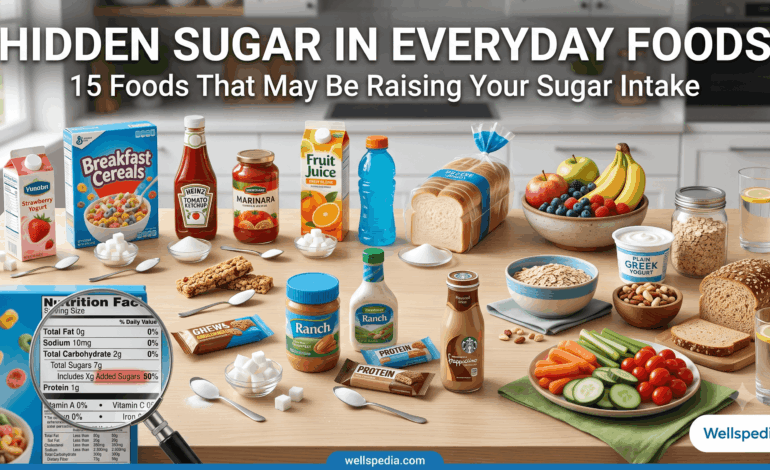
Most people associate sugar with desserts, chocolates, and soft drinks. However, many everyday foods—including those marketed as “healthy”—contain surprising amounts of added sugar.
Hidden sugar can quietly increase your daily calorie intake and raise your risk of obesity, type 2 diabetes, heart disease, fatty liver disease, and tooth decay. Learning where sugar hides is the first step toward making healthier food choices.
In this guide, you’ll discover 15 common foods that often contain hidden sugar, how to identify it on food labels, and practical ways to reduce your sugar intake.
What Is Hidden Sugar?
Hidden sugar refers to sugars that manufacturers add to processed foods to improve flavor, texture, color, or shelf life. Unlike naturally occurring sugars found in fruits and milk, added sugars provide extra calories without many essential nutrients.
Added sugars can appear under many different names, making them easy to miss.
Common names include:
- Sucrose
- Glucose
- Fructose
- Dextrose
- Maltose
- Corn syrup
- High-fructose corn syrup
- Cane sugar
- Brown sugar
- Invert sugar
- Rice syrup
- Agave syrup
- Honey
- Molasses
Why Too Much Added Sugar Is Harmful
Consuming excess added sugar over time may contribute to:
- Weight gain
- Obesity
- Type 2 diabetes
- Heart disease
- Fatty liver disease
- High triglycerides
- Tooth decay
- Increased inflammation
- Energy crashes
- Higher risk of metabolic syndrome
15 Everyday Foods with Hidden Sugar
1. Flavored Yogurt
Many flavored yogurts contain several teaspoons of added sugar.
Healthier choice: Plain Greek yogurt with fresh fruit.
2. Breakfast Cereals
Even cereals labeled as “whole grain” may contain high amounts of sugar.
Choose cereals with:
- High fiber
- Low added sugar
- Whole grains listed first
3. Granola Bars
Granola bars often contain syrups and sweeteners that increase sugar content.
Choose bars with nuts, seeds, and minimal added sugar.
4. Tomato Ketchup
Just one tablespoon of ketchup may contain around one teaspoon of sugar.
Use homemade tomato sauce whenever possible.
5. Pasta Sauce
Many packaged pasta sauces include added sugar to reduce acidity.
Always compare nutrition labels before buying.
6. Packaged Fruit Juice
Fruit juice often contains concentrated fruit sugars and may include added sugar.
Whole fruits are usually a healthier option because they provide fiber.
7. Sports and Energy Drinks
Many sports drinks contain significant amounts of sugar.
Unless you’re engaged in prolonged intense exercise, water is usually the better choice.
8. Flavored Oatmeal
Instant flavored oatmeal packets often contain added sugar.
Choose plain oats and add fresh fruit or cinnamon.
9. Peanut Butter
Some peanut butter brands include added sugar and hydrogenated oils.
Select natural peanut butter made with peanuts and minimal ingredients.
10. White Bread
Certain packaged breads contain added sugar to improve taste and texture.
Choose whole-grain bread with little or no added sugar.
11. Salad Dressings
Low-fat dressings often replace fat with sugar.
Homemade olive oil and lemon dressing is a healthier alternative.
12. Instant Soups
Some packaged soups contain unexpected amounts of sugar along with high sodium.
Always check the nutrition facts.
13. Protein Bars
Many protein bars are closer to candy bars due to their sugar content.
Look for bars with high protein and low added sugar.
14. Flavored Coffee Drinks
Ready-to-drink coffee beverages may contain several teaspoons of added sugar.
Choose unsweetened coffee whenever possible.
15. Packaged Smoothies
Store-bought smoothies can contain fruit concentrates, syrups, and added sugars.
Homemade smoothies offer better control over ingredients.
How to Identify Hidden Sugar on Food Labels
When shopping, always:
- Read the ingredient list.
- Check the “Added Sugars” value on the nutrition label.
- Compare similar products.
- Choose foods with fewer ingredients.
- Select products with little or no added sugar.
Simple Ways to Reduce Sugar Intake
Eat More Whole Foods
Fresh fruits, vegetables, legumes, whole grains, and nuts naturally contain valuable nutrients.
Drink Water
Replace sugary beverages with plain water or infused water.
Cook More Meals at Home
Preparing food yourself gives you better control over sugar content.
Choose Unsweetened Products
Select unsweetened yogurt, oatmeal, beverages, and cereals whenever possible.
Limit Processed Foods
The fewer processed foods you eat, the easier it becomes to reduce hidden sugar.
Signs You May Be Eating Too Much Sugar
Watch for these warning signs:
- Frequent sugar cravings
- Constant hunger
- Afternoon energy crashes
- Weight gain
- Difficulty losing weight
- Tooth cavities
- Mood swings
- Poor concentration
Healthier Food Swaps
| Instead of | Choose |
|---|---|
| Flavored yogurt | Plain Greek yogurt |
| Fruit juice | Whole fruit |
| Sugary cereal | Oats |
| Sweet coffee | Black coffee |
| Soda | Water |
| Candy | Fresh fruit |
| Sugary snacks | Nuts |
Frequently Asked Questions
Is natural sugar the same as added sugar?
No. Natural sugars found in fruits and milk come with fiber, vitamins, minerals, or protein. Added sugars are included during food processing.
Is honey healthier than sugar?
Honey contains small amounts of antioxidants but still counts as added sugar when used as a sweetener.
How much added sugar should adults consume?
Health experts recommend limiting added sugar and choosing whole foods whenever possible.
Can children consume added sugar?
Children should consume as little added sugar as possible and focus on nutrient-rich foods.
When Should You Consult a Healthcare Professional?
Consider speaking with a healthcare provider or dietitian if you experience:
- Difficulty controlling sugar cravings
- Prediabetes or diabetes
- Unexplained weight gain
- High cholesterol
- Fatty liver disease
- Concerns about your diet
Key Takeaway
Hidden sugar is present in many everyday foods—even those that seem healthy. Reading food labels, choosing minimally processed foods, and reducing sugary beverages can significantly lower your sugar intake and improve your long-term health. Small changes in your daily diet can make a big difference over time.