Best Foods to Lower Cholesterol Naturally
High cholesterol is one of the leading risk factors for heart disease and stroke, but the good news is that your daily food choices can make a significant difference. Choosing the right foods to lower cholesterol can help reduce unhealthy LDL (“bad”) cholesterol, improve HDL (“good”) cholesterol, and support overall cardiovascular health.
A heart-friendly diet does more than lower cholesterol—it also helps control blood pressure, maintain a healthy weight, and reduce inflammation. While medications may be necessary for some people, eating nutritious foods and staying physically active are essential parts of long-term cholesterol management.
In this guide, you’ll learn which foods naturally help lower cholesterol, which foods to limit, and how simple dietary changes can protect your heart.
What Is Cholesterol?
Cholesterol is a waxy substance produced by the liver and found in certain foods. Your body needs cholesterol to build healthy cells, produce hormones, and make vitamin D. However, too much cholesterol—especially LDL cholesterol—can build up in the walls of your arteries.
There are two main types:
LDL (Low-Density Lipoprotein)
Often called bad cholesterol, LDL can accumulate inside blood vessels and form plaque. Over time, this narrows the arteries and increases the risk of heart attack and stroke.
HDL (High-Density Lipoprotein)
Known as good cholesterol, HDL helps remove excess cholesterol from the bloodstream and carries it back to the liver for disposal.
Maintaining a healthy balance between LDL and HDL is one of the most effective ways to protect your heart.
Why Diet Matters for Cholesterol
The foods you eat have a direct impact on your cholesterol levels. Diets high in saturated fats, trans fats, and added sugars tend to raise LDL cholesterol, while foods rich in soluble fiber, healthy fats, and plant-based nutrients can help lower it.
A balanced diet can:
- Lower LDL cholesterol naturally
- Increase HDL cholesterol
- Improve blood vessel health
- Reduce inflammation
- Support healthy blood pressure
- Lower the risk of heart disease
Combining healthy eating with regular exercise provides even greater benefits.
Best Foods to Lower Cholesterol Naturally
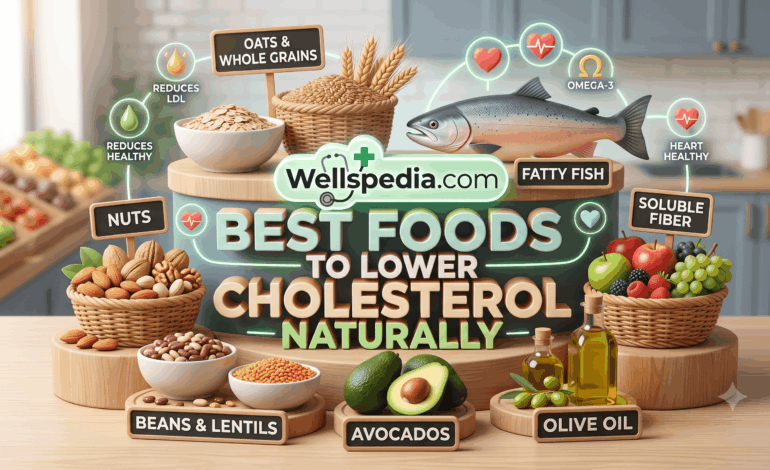
1. Oats and Whole Grains
Oats are among the best foods for lowering cholesterol because they contain beta-glucan, a type of soluble fiber that helps reduce LDL cholesterol by limiting its absorption in the digestive system.
Other whole grains include:
- Brown rice
- Barley
- Whole wheat
- Quinoa
Start your day with oatmeal or whole-grain cereal for a heart-healthy breakfast.
2. Beans and Lentils
Beans, lentils, chickpeas, and peas are excellent sources of plant protein and fiber. They help you stay full for longer and support healthy cholesterol levels.
Try adding beans to:
- Soups
- Salads
- Curries
- Rice dishes
Replacing some red meat meals with legumes is a simple way to improve heart health.
3. Fatty Fish
Fish rich in omega-3 fatty acids can improve heart health and reduce triglyceride levels.
Good choices include:
- Salmon
- Sardines
- Mackerel
- Trout
- Tuna
Aim to eat fish at least twice a week, unless advised otherwise by your healthcare provider.
4. Nuts and Seeds
Almonds, walnuts, flaxseeds, chia seeds, and sunflower seeds provide healthy fats, fiber, and plant sterols that may help lower LDL cholesterol.
A small handful of unsalted nuts makes a nutritious snack.
5. Avocados
Avocados are rich in monounsaturated fats, which can help improve cholesterol levels when used in place of foods high in saturated fat.
Enjoy avocado in:
- Salads
- Sandwiches
- Smoothies
- Whole-grain toast
6. Olive Oil
Replacing butter or ghee with extra-virgin olive oil is a heart-smart choice. Olive oil contains antioxidants and healthy fats that support cardiovascular health.
Use it for:
- Salad dressings
- Roasted vegetables
- Light cooking
7. Fruits That Help Lower Cholesterol
Many fruits are naturally high in fiber and antioxidants.
Top choices include:
- Apples
- Oranges
- Berries
- Pears
- Grapes
Eating a variety of colorful fruits each day provides nutrients that support healthy blood vessels.
8. Vegetables for Heart Health
Vegetables are low in calories and rich in vitamins, minerals, and fiber.
Include more:
- Spinach
- Broccoli
- Carrots
- Brussels sprouts
- Kale
Aim to fill half your plate with vegetables at lunch and dinner.
9. Soy-Based Foods
Soy products such as tofu, soy milk, and edamame can be healthy alternatives to high-fat animal products. Including soy protein as part of a balanced diet may contribute to modest improvements in cholesterol levels.
10. Green Tea
Green tea contains natural compounds called catechins, which may support heart health when combined with a healthy diet and lifestyle.
Replacing sugary drinks with unsweetened green tea can be a simple healthy habit.
Daily Habits That Support Healthy Cholesterol
Healthy foods work best when combined with positive lifestyle habits.
- Walk for at least 30 minutes most days.
- Maintain a healthy body weight.
- Avoid smoking.
- Limit alcohol intake.
- Get enough sleep.
- Manage stress through relaxation techniques.
- Schedule regular cholesterol screenings.
Foods to Avoid If You Have High Cholesterol
While adding heart-healthy foods is important, reducing foods that raise LDL cholesterol is equally essential.
Try to limit or avoid:
Fried Foods
French fries, fried chicken, and other deep-fried foods often contain unhealthy fats that can raise cholesterol levels.
Processed Meats
Sausages, bacon, hot dogs, and salami are usually high in saturated fat and sodium, making them poor choices for heart health.
Fast Food
Many fast-food meals are rich in calories, unhealthy fats, and excess salt, which may contribute to high cholesterol and high blood pressure.
Sugary Foods and Drinks
Soft drinks, candies, pastries, and desserts can increase triglycerides and contribute to weight gain.
Full-Fat Dairy Products
Whole milk, butter, cream, and high-fat cheese contain saturated fat. Choose low-fat or fat-free alternatives when possible.
Packaged Snacks
Chips, cookies, and crackers may contain trans fats and excessive sodium. Check nutrition labels before purchasing.
Heart-Healthy One-Day Meal Plan
Breakfast
- Oatmeal topped with fresh berries
- A handful of almonds
- Green tea without added sugar
Mid-Morning Snack
- One apple
- A few walnuts
Lunch
- Grilled salmon
- Brown rice
- Mixed vegetable salad with olive oil dressing
Evening Snack
- Low-fat yogurt
- Fresh fruit
Dinner
- Lentil soup
- Steamed broccoli
- Whole-grain bread
Before Bed
- Warm low-fat milk or herbal tea (if suitable for you)
This meal plan provides fiber, healthy fats, lean protein, and essential nutrients that support heart health.
Additional Lifestyle Tips
Healthy eating works best when combined with other positive habits.
- Walk for at least 30 minutes on most days.
- Maintain a healthy body weight.
- Quit smoking if you smoke.
- Limit alcohol intake.
- Sleep 7–9 hours each night.
- Manage stress through meditation, yoga, or deep breathing.
- Have your cholesterol checked regularly.
Common Myths About Cholesterol
Myth 1: Only older adults have high cholesterol.
Fact: High cholesterol can affect adults of any age, especially if there is a family history or unhealthy lifestyle.
Myth 2: Thin people cannot have high cholesterol.
Fact: Genetics, diet, and certain medical conditions can cause high cholesterol regardless of body weight.
Myth 3: All fats are unhealthy.
Fact: Healthy fats from olive oil, nuts, seeds, and avocados can support heart health when eaten in moderation.
Myth 4: Medication means diet no longer matters.
Fact: Even if you take cholesterol-lowering medication, a healthy diet and regular exercise remain essential.
Frequently Asked Questions
Can food really lower cholesterol?
Yes. Foods rich in soluble fiber, healthy fats, and plant-based nutrients can help lower LDL cholesterol as part of an overall healthy lifestyle.
Which fruit is best for lowering cholesterol?
Apples, berries, oranges, pears, and grapes are good choices because they contain fiber and antioxidants.
How long does it take to improve cholesterol through diet?
Many people notice improvements within a few months, but the timeline varies depending on individual health, lifestyle, and treatment plans.
Is egg consumption safe if I have high cholesterol?
For many healthy people, moderate egg consumption can be part of a balanced diet. If you have high cholesterol or heart disease, discuss dietary choices with your healthcare provider.
Can exercise improve cholesterol levels?
Yes. Regular physical activity can increase HDL (“good”) cholesterol and support overall cardiovascular health.
Key Takeaways
- A heart-healthy diet can help lower LDL cholesterol naturally.
- Eat more fruits, vegetables, whole grains, beans, nuts, seeds, and healthy fats.
- Limit fried foods, processed meats, sugary snacks, and foods high in saturated fat.
- Combine healthy eating with regular exercise, adequate sleep, and stress management.
- Regular cholesterol screening helps detect problems early.
Conclusion
Making smarter food choices is one of the most effective ways to protect your heart and improve cholesterol levels. While no single food is a cure, a balanced eating pattern rich in fiber, healthy fats, fruits, vegetables, and whole grains can significantly support cardiovascular health.
Small, consistent lifestyle changes—such as preparing healthy meals, staying active, and attending regular medical check-ups—can make a meaningful difference over time. If you have concerns about your cholesterol levels, consult a qualified healthcare professional for personalized advice.