Vanishing Twin Syndrome: Causes, Symptoms, Diagnosis, and Pregnancy Management
Introduction
Pregnancy involving twins or multiple babies can be an exciting journey for expectant parents. However, in some cases, one fetus may stop developing and disappear during early pregnancy. This phenomenon is known as Vanishing Twin Syndrome (VTS).
With modern ultrasound technology, healthcare providers can now detect this condition more frequently than in the past. Although it can be emotionally challenging for parents, most pregnancies affected by VTS continue normally with the remaining baby developing healthily.
Understanding the causes, symptoms, diagnosis, and management of Vanishing Twin Syndrome can help families navigate this unexpected situation with confidence.
What Is Vanishing Twin Syndrome?
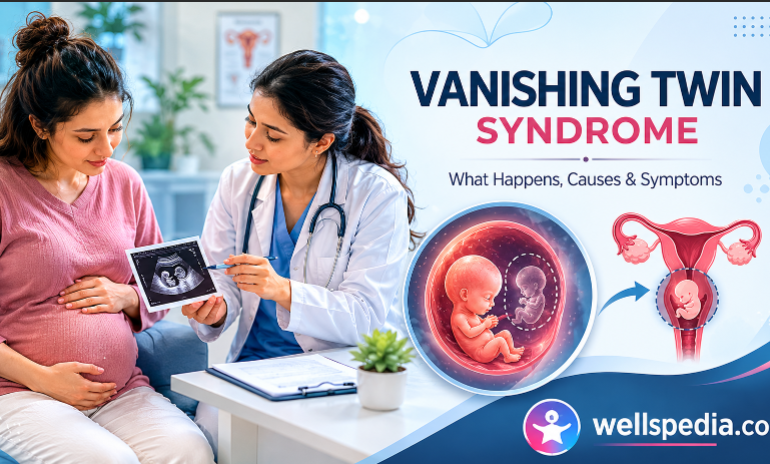
Vanishing Twin Syndrome occurs when one fetus in a twin or multiple pregnancy dies during pregnancy, most commonly during the first trimester. The tissue of the lost fetus is gradually absorbed by the mother’s body, the placenta, or the surviving baby.
Before routine prenatal ultrasounds became common, many cases of VTS went unnoticed because the pregnancy continued normally with the remaining fetus.
Medical experts estimate that Vanishing Twin Syndrome may occur in a significant percentage of multiple pregnancies, making it more common than many people realize.
Why Does Vanishing Twin Syndrome Happen?
The exact cause of Vanishing Twin Syndrome remains unclear. Researchers believe that, similar to many early miscarriages, developmental abnormalities may play a major role.
Possible contributing factors include:
- Chromosomal abnormalities in the lost fetus
- Genetic mutations affecting fetal development
- Placental abnormalities
- Problems during early embryonic growth
- Environmental influences that affect fetal viability
In many cases, the surviving fetus is completely healthy, suggesting that the vanished twin may have had developmental issues that prevented normal growth.
Risk Factors for Vanishing Twin Syndrome
Although VTS can occur in any multiple pregnancy, certain factors may increase the likelihood.
Advanced Maternal Age
Women over the age of 30 may have a slightly increased risk due to age-related chromosomal changes.
Previous Pregnancy Loss
A history of recurrent miscarriages may indicate underlying factors that can contribute to fetal loss during pregnancy.
Fertility Treatments
Assisted reproductive techniques such as IVF and other fertility treatments often increase the chances of multiple pregnancies, which naturally raises the risk of VTS.
Nutritional Deficiencies
Poor maternal nutrition, particularly deficiencies involving essential nutrients like folic acid, may affect fetal development and pregnancy outcomes.
Multiple Gestation Pregnancies
The more fetuses present during early pregnancy, the greater the possibility that one may stop developing.
Signs and Symptoms of Vanishing Twin Syndrome
Many women experience no noticeable symptoms at all. The condition is often discovered during a routine ultrasound examination.
However, some mothers may experience:
Light Vaginal Bleeding
Mild spotting or bleeding during the first trimester can sometimes indicate the loss of one fetus.
Pelvic Cramping
Some women report mild abdominal discomfort similar to menstrual cramps.
Lower Pregnancy Hormone Levels
Human chorionic gonadotropin (hCG) levels may rise more slowly or decline unexpectedly after initially suggesting a multiple pregnancy.
Ultrasound Findings
The most common sign is the disappearance of one gestational sac or the absence of fetal heartbeat during follow-up scans.
Is Vanishing Twin Syndrome the Same as a Miscarriage?
Vanishing Twin Syndrome shares similarities with miscarriage but is not identical.
In a miscarriage, the entire pregnancy is lost. In contrast, VTS involves the loss of only one fetus while the remaining fetus continues developing normally.
For this reason, many specialists consider VTS a partial pregnancy loss rather than a complete miscarriage.
Potential Complications for the Mother
Most women experience no major medical complications following Vanishing Twin Syndrome.
Rare complications may include:
- Infection from incomplete tissue absorption
- Increased vaginal bleeding
- Cervical weakness in future pregnancy stages
- Emotional distress, anxiety, or depression
- Increased risk of premature labor in specific cases
Regular prenatal monitoring helps identify and manage any concerns early.
How Does Vanishing Twin Syndrome Affect the Surviving Baby?
Fortunately, the majority of surviving babies develop normally and are born healthy.
However, in rare situations, complications may occur, including:
Restricted Fetal Growth
The surviving fetus may grow more slowly than expected during pregnancy.
Premature Birth
There may be a slightly increased risk of early delivery in some pregnancies.
Low Birth Weight
Some babies may weigh less than average at birth.
Neurological Complications
Rarely, complications affecting brain development may occur if the fetal loss happens later in pregnancy.
Chimerism
In exceptionally rare cases, cells from the vanished twin may become incorporated into the surviving baby, resulting in two distinct genetic cell lines within one individual.
Most surviving babies experience none of these complications and continue developing normally.
How Is Vanishing Twin Syndrome Diagnosed?
Prenatal Ultrasound
Ultrasound remains the primary diagnostic tool for identifying VTS.
Early pregnancy scans may reveal:
- Two gestational sacs initially
- Absence of heartbeat in one fetus during later scans
- A shrinking or disappearing gestational sac
The condition is most commonly diagnosed between the eighth and twelfth weeks of pregnancy.
hCG Monitoring
Doctors may monitor pregnancy hormone levels if VTS is suspected. Unexpected changes in hCG levels may provide additional clues.
Findings at Delivery
When fetal loss occurs later in pregnancy, healthcare providers may identify:
Fetus Compressus
A compressed fetal remnant resulting from pressure inside the uterus.
Fetus Papyraceus
A flattened, paper-like fetal structure caused by fluid loss and compression.
Treatment and Management of Vanishing Twin Syndrome
There is usually no direct treatment required for Vanishing Twin Syndrome.
Instead, care focuses on monitoring the health of the mother and surviving baby.
Routine Prenatal Care
Most pregnancies continue as singleton pregnancies after the loss of one twin.
Regular prenatal visits help ensure healthy fetal growth.
Monitoring Fetal Development
Additional ultrasounds may be recommended to track development and identify potential complications.
Managing Growth Restrictions
If fetal growth slows, doctors may recommend:
- Increased prenatal monitoring
- Nutritional support
- Rest and activity modifications
- Specialized maternal-fetal medicine consultation
Emotional Support
The emotional impact of losing one baby while continuing the pregnancy can be complex.
Support options include:
- Counseling services
- Pregnancy support groups
- Family and social support
- Mental health therapy when needed
Is a D&C Procedure Necessary?
A dilation and curettage (D&C) procedure is generally not required for Vanishing Twin Syndrome.
In most cases, the body naturally absorbs the fetal tissue without intervention.
A healthcare provider may consider a D&C if:
- Tissue remains in the uterus
- Significant bleeding occurs
- Infection develops
- There are concerns about incomplete absorption
The decision is made on an individual basis after careful medical evaluation.
Coping Emotionally After Vanishing Twin Syndrome
Many parents experience mixed emotions after a VTS diagnosis. They may feel grateful for the healthy surviving baby while simultaneously grieving the loss of the other twin.
Healthy coping strategies include:
- Acknowledging feelings of grief
- Speaking openly with healthcare providers
- Seeking emotional support from loved ones
- Joining pregnancy or loss support communities
- Honoring the lost twin in a meaningful personal way
Emotional healing is an important part of the pregnancy journey.
New Research and Future Developments
Medical researchers continue studying Vanishing Twin Syndrome to better understand its causes and outcomes.
Recent advancements include:
Improved Ultrasound Imaging
Modern high-resolution ultrasound technology enables earlier and more accurate diagnosis.
Artificial Intelligence in Prenatal Care
AI-assisted imaging tools may improve the detection of subtle pregnancy changes.
Genetic Testing Innovations
Researchers are exploring genetic screening methods that may help identify underlying causes of fetal loss in multiple pregnancies.
These developments may improve risk assessment and prenatal care in the future.
Conclusion
Vanishing Twin Syndrome is a relatively common event in multiple pregnancies where one fetus stops developing and is naturally absorbed during pregnancy. While the experience can be emotionally difficult, the outlook for the surviving baby is usually excellent.
Early prenatal care, regular ultrasounds, and ongoing communication with healthcare providers are essential for monitoring the health of both mother and baby. As medical technology advances, healthcare professionals continue to gain deeper insights into this condition, leading to improved diagnosis, support, and pregnancy outcomes.