High Cholesterol Symptoms: Everything You Need to Know
High cholesterol is one of the leading causes of heart disease and stroke worldwide. The biggest challenge is that high cholesterol symptoms are usually absent until serious health problems develop. Many people have unhealthy cholesterol levels for years without realizing it because the condition often progresses silently.
Understanding high cholesterol symptoms, causes, and treatment options can help you take action before complications occur. Early diagnosis, a healthy lifestyle, and regular medical checkups can significantly reduce your risk of cardiovascular disease.
What Is Cholesterol?
Cholesterol is a waxy, fat-like substance produced naturally by the liver. Your body needs cholesterol to make hormones, vitamin D, and cell membranes.
There are two main types:
LDL (Low-Density Lipoprotein)
Often called bad cholesterol, LDL can build up inside blood vessels and form plaque, narrowing the arteries.
HDL (High-Density Lipoprotein)
Known as good cholesterol, HDL removes excess cholesterol from the bloodstream and transports it back to the liver for disposal.
Keeping LDL low and HDL at healthy levels is essential for long-term heart health.
High Cholesterol Symptoms
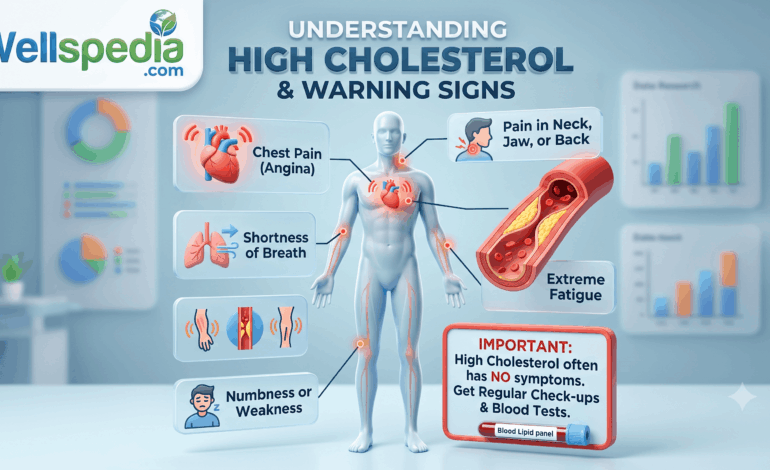
One of the most concerning facts about high cholesterol is that it usually has no obvious symptoms.
However, when cholesterol levels remain high for many years, blocked arteries may lead to symptoms such as:
- Chest pain (angina)
- Shortness of breath
- Fatigue during physical activity
- Pain in the legs while walking
- Numbness in the hands or feet
- Heart attack
- Stroke
These symptoms often result from complications rather than high cholesterol itself.
Common Causes of High Cholesterol
Several factors can increase cholesterol levels.
Poor Diet
Eating foods rich in saturated fats, trans fats, and processed sugars can raise LDL cholesterol.
Examples include:
- Fried foods
- Fast food
- Processed meat
- Butter
- Bakery products
Lack of Exercise
Physical inactivity lowers HDL cholesterol and contributes to weight gain.
Regular exercise helps improve cholesterol balance.
Obesity
Being overweight increases LDL cholesterol and triglycerides while reducing HDL cholesterol.
Smoking
Smoking damages blood vessels and lowers good cholesterol.
Excess Alcohol
Heavy drinking may increase triglyceride levels and contribute to heart disease.
Genetics
Some people inherit a condition called familial hypercholesterolemia, causing extremely high cholesterol even with a healthy lifestyle.
Risk Factors
You may have a greater risk if you:
- Are over 40 years old
- Have diabetes
- Have high blood pressure
- Smoke
- Are overweight
- Eat an unhealthy diet
- Have a family history of heart disease
- Exercise very little
Why High Cholesterol Is Dangerous
Excess LDL cholesterol sticks to artery walls.
Over time this forms plaque, leading to:
- Coronary artery disease
- Heart attack
- Stroke
- Peripheral artery disease
- Kidney problems
The narrowing of arteries reduces blood flow throughout the body.
How Is High Cholesterol Diagnosed?
Doctors diagnose high cholesterol using a lipid profile blood test.
The test measures:
- Total cholesterol
- LDL cholesterol
- HDL cholesterol
- Triglycerides
Adults should have their cholesterol checked regularly, especially if they have risk factors.
Healthy Cholesterol Levels
| Cholesterol Type | Healthy Level |
|---|---|
| Total Cholesterol | Less than 200 mg/dL |
| LDL | Less than 100 mg/dL |
| HDL | Above 60 mg/dL |
| Triglycerides | Less than 150 mg/dL |
Treatment Options
Treatment depends on cholesterol levels and overall cardiovascular risk.
Lifestyle Changes
Doctors usually recommend:
- Eating a heart-healthy diet
- Exercising regularly
- Losing excess weight
- Quitting smoking
- Limiting alcohol
Medications
If lifestyle changes are insufficient, medications may include:
- Statins
- Ezetimibe
- PCSK9 inhibitors
- Bile acid sequestrants
Always take medications as prescribed by your healthcare provider.
Best Foods to Lower Cholesterol
A healthy diet plays a major role.
Choose:
- Oats
- Whole grains
- Fruits
- Vegetables
- Beans
- Lentils
- Nuts
- Olive oil
- Fatty fish
- Avocados
Limit:
- Fried foods
- Processed snacks
- Sugary drinks
- Red meat
- Full-fat dairy products
Lifestyle Tips for Better Heart Health
Simple daily habits can make a big difference.
- Walk for at least 30 minutes daily.
- Maintain a healthy weight.
- Eat more fiber.
- Avoid smoking.
- Sleep 7–9 hours every night.
- Manage stress through meditation or yoga.
- Get regular cholesterol screenings.
Can High Cholesterol Be Prevented?
Yes.
Many cases can be prevented by:
- Eating nutritious meals
- Staying physically active
- Maintaining a healthy body weight
- Avoiding tobacco
- Limiting alcohol
- Monitoring cholesterol levels regularly
Early prevention is much easier than treating heart disease later.
Myths About High Cholesterol
Myth 1: Only overweight people have high cholesterol.
Fact: Even thin individuals can have high cholesterol due to genetics or diet.
Myth 2: High cholesterol always causes symptoms.
Fact: Most people experience no symptoms until complications occur.
Myth 3: Young adults don’t need cholesterol tests.
Fact: High cholesterol can develop at any age.
Myth 4: Medication alone is enough.
Fact: Healthy eating and exercise remain essential even if you take medication.
Frequently Asked Questions
Can stress increase cholesterol?
Chronic stress may indirectly increase cholesterol by promoting unhealthy eating habits and hormonal changes.
Is high cholesterol curable?
It can usually be controlled through healthy lifestyle changes and medication if necessary.
Which exercise is best?
Walking, cycling, swimming, jogging, and strength training all support heart health.
How often should cholesterol be checked?
Healthy adults should generally have their cholesterol checked every 4–6 years, or more often if recommended by their healthcare provider.
Conclusion
High cholesterol is often called a silent condition because it rarely causes symptoms until serious complications develop. Regular health screenings, nutritious eating, physical activity, and maintaining a healthy weight are the most effective ways to manage cholesterol and protect your heart.
Recognizing the risk factors and taking preventive action today can lower your chances of heart disease, stroke, and other cardiovascular complications. If you have concerns about your cholesterol levels, consult a qualified healthcare professional for testing and personalized advice.